
Europe is full of famous grounds like the Bernabéu in Madrid or the iconic San Siro in Milan, but many lesser-known stadiums can offer the same atmosphere, character, and value for visiting fans. Below is our top 5 underrated European stadiums that deserve far more attention.
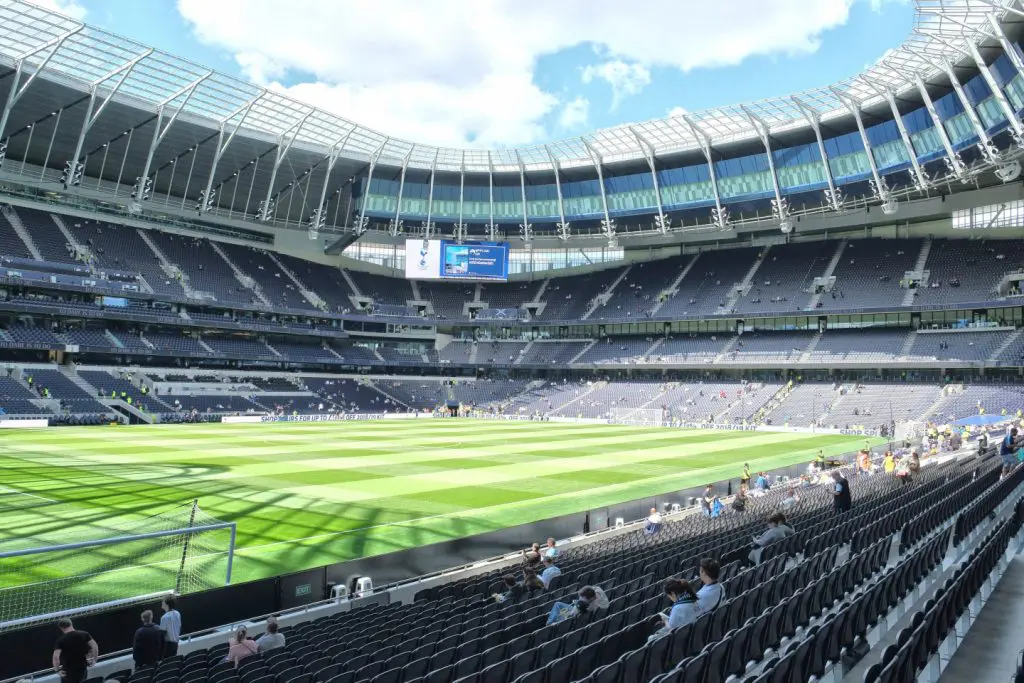
1. Stadio Ennio Tardini – Parma, Italy
In a country obsessed with San Siro and the Olimpico, Parma’s ‘Stadio Ennio Tardini’ quietly offers another of Italy’s characterful football experiences. It is an old-school stadium in the middle of a residential area, where you walk past apartment blocks and cafés before suddenly seeing the stands rise up in front of you. The Tardini feels intimate, with fans close to the pitch and a view that often includes the surrounding city beyond the stands, giving games a distinctly cozy feeling. Combine that with Parma’s rich 1990s history in European competition and you get a stadium that deserves far more attention from groundhoppers than it receives.
2. Stade de la Beaujoire – Nantes, France
‘Stade de la Beaujoire’ in Nantes is one of France’s most atmospheric stadiums yet rarely gets mentioned alongside Marseille or Paris. Its distinctive concrete design and bowl-like layout give you excellent sight lines, while the club’s famous yellow and green colors add a bright, almost festival feel on matchdays. The stadium hosted games at Euro 1984 and the 1998 World Cup, but today it feels more like a cozy neighborhood gathering place than a global venue. For travelers who want to mix western France’s riverside charm, local food, and passionate but friendly support, Beaujoire is a hugely underrated stop.
3. Estadio El Sadar – Pamplona, Spain
Spain is known for the Bernabéu and Camp Nou, yet ‘Estadio El Sadar’ in Pamplona offers one of the country’s most intense atmospheres on a much smaller scale. Unlike some of Spain’s tourist-heavy stadiums, El Sadar feels local, with fans who live and breathe the club, and a stadium that feels built for them rather than for cameras. For a visitor, catching La Liga games here is a brilliant way to experience Spanish football away from the big-city glare.
4. Tose Proeski Arena (Philip II) – Skopje, North Macedonia
Skopje’s national stadium, now known as ‘Tose Proeski Arena’, is a modern stadium tucked among hills and city streets, creating dramatic views as you approach and once you’re inside. With a capacity of just over 30,000, it hits a sweet spot: big enough for major nights, small enough that it doesn’t create too much chaos. Because North Macedonia sits outside Europe’s traditional football hotspots, the stadium rarely features in mainstream lists despite hosting major European matches and international fixtures. For adventurous groundhoppers who like combining new cities, low prices, and proud local support, this arena is a hidden gem.
5. Stadion Feijenoord “De Kuip” – Rotterdam, Netherlands
While Ajax’s Johan Cruyff Arena often steals the Dutch spotlight, Feyenoord’s ‘Stadion Feijenoord’, universally called ‘De Kuip’, is arguably the country’s purest football stadium. Built in the 1930s with double-tiered stands and uninterrupted views, it pioneered the kind of sight lines many modern stadiums still try to copy. On big nights, especially European games, De Kuip becomes a wall of noise, with steep stands and passionate supporters all around the stadium. For visitors to the Netherlands, a trip to Rotterdam and a match at De Kuip offers a raw, historic experience that feels very different from the polished feel of newer arenas.
Your next football trip
These five stadiums won’t just give you ninety minutes of football, they’ll give you stories you’ll tell for years. Imagine tasting local food outside the stadiums and singing with home fans in steep stands, without the hecticness of big cities. Each stadium offers its own mix of history, culture, and raw emotion that TV can never capture. So pick a weekend, the rest we will take care of, and build a trip around one of these hidden arenas. Once you’ve felt the noise, met the locals, and walked back through those crowded streets, you’ll already be planning the next stadium on your list.